






So You Want to Be a Music Librarian
April 13, 2026
By: Anna LoPrete, Music Librarian
In honor of National Library Week and International Special Librarians Day, I, Anna LoPrete, am sharing some information about my own brand of special librarianship—music librarianship.
My origin story
I was drawn to collecting, organizing, and describing information from an early age. At age nine, I created my first card catalog. At eleven, I tried to volunteer at the public library (they turned me away, saying I was too young, can you believe that?) At thirteen, I made a lending library in my closet, complete with library cards and policies (inexplicably my friends were not as excited about this as I was.) At sixteen I tried to read the dictionary (I made it through about “brown.”) In high school I inventoried my choir teacher’s library. Finally, in college, I got my first paid library gig: cataloging LPs at the University of Utah’s McKay Music Library. What started as a temp job over the winter break, became a steady gig when I was handpicked by the library’s director as one of four people chosen to catalog the collection.
At that point, I was a piano performance major with a passion for collaborative playing and for music history. I decided to pursue both as my career and went to the University of Cincinnati College-Conservatory of Music (CCM) for a master’s degree in music history and literature with a sort of minor in piano, intending to pursue a PhD in musicology. I’ve always wanted to study everything and thought that musicology was a way to do that: languages, literature, humanities, even the history and philosophy of science -- it was all related. But as it turns out, that breadth of interest and knowledge is even more useful for a librarian!
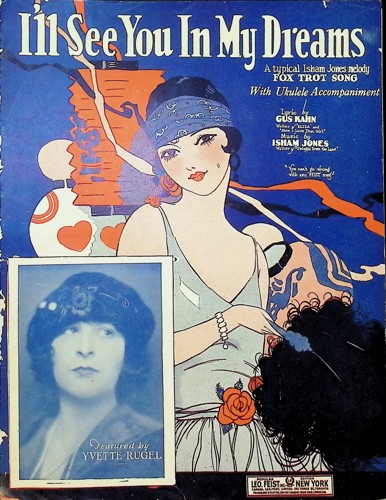
Prior to starting the Master of Library Science with Music Librarianship Specialization at Indiana University, I got the chance of a lifetime: I was hired as a Junior Fellow at the Library of Congress! It was absolutely amazing: I learned so much about history, about music, and about working with music collections. It’s also where my obsession with sheet music started, especially the gorgeous illustrations on the covers. Working at LC confirmed that this was the right path for me.
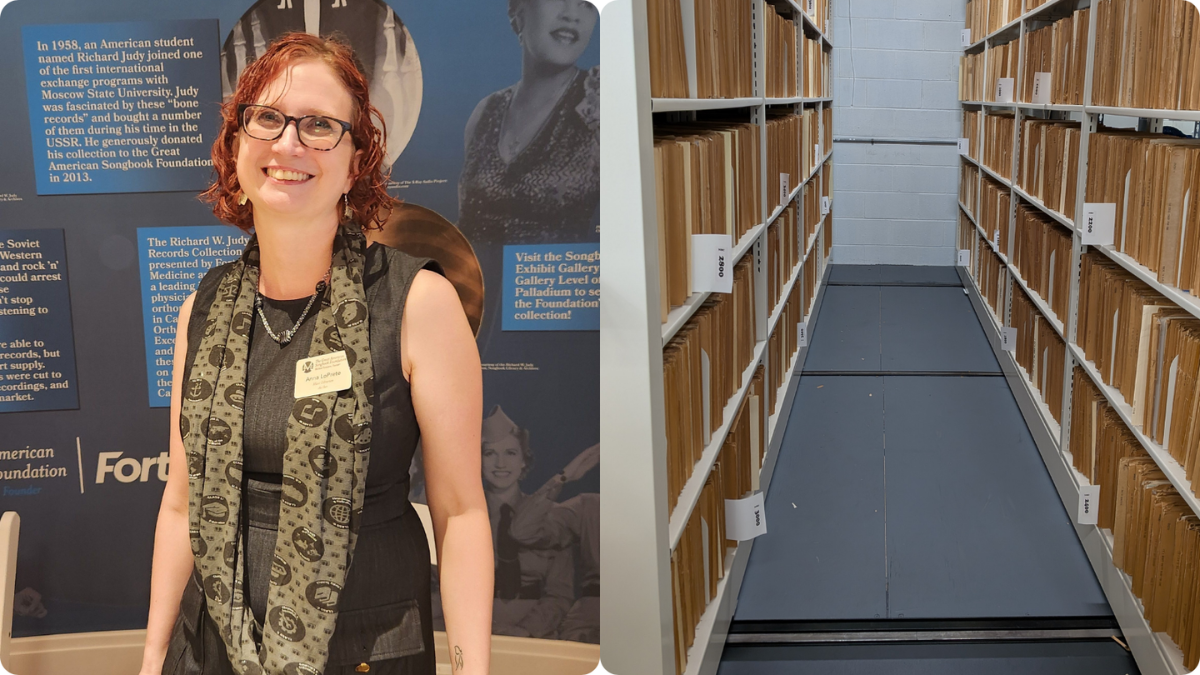
After I got my degree, I was hired on full-time at the Cook Music Library at Indiana University where I had worked as a student. I spent seven years there cataloging musical scores and books until I was hired by the Songbook Foundation in 2021 as the organization’s first music librarian.
What do music librarians do?
Music librarians do a lot of the same tasks that other librarians do, just concentrating on music. At the foundation of the profession, catalogers describe items in library catalogs to help users identify and find books, scores, sound recordings, and more. Archivists arrange and describe collections devoted to a single person or organization’s papers and other artifacts. Reference librarians use the catalog and print or electronic resources to answer questions from the simplest “help me find this book” to in-depth research questions. Instruction librarians teach students to utilize library resources as well as research skills and the importance of critical thinking. Collection development librarians select items based on the library’s collection development policy. Scholarly communication librarians support researchers through managing copyright and open access.
In addition, some music librarians work with performing ensembles like orchestras or bands to obtain and prepare the music the performers use in each concert. They make sure that each musician has the printed parts they need and that those parts are marked with the conductor’s preferred bowings and other markings. They work with publishing companies to purchase or borrow music and to obtain the rights to perform it.
Where do music librarians work?
Music librarians work in a variety of places and capacities—public libraries, academic libraries, performing ensembles, radio stations, and special archives like the GASF. The kind of work music librarians do varies greatly by the type of organization. For instance, a music librarian at a small liberal arts college will likely do a variety of tasks, even all the tasks—instruction, reference, collection development, and cataloging. They may even be responsible for multiple subject areas ranging from related subjects like performing or fine arts to social studies and even sciences. The larger the organization, the more specialized the position. A large music library like the one I worked in at IU has different people doing each of those tasks.
How do you become a music librarian?
Professional library positions require a graduate degree in library science. Music librarians also require a strong background in music, usually a bachelor's degree in music. Many positions require or strongly prefer a master’s degree in music. However, if you are interested in working in a music library or a library in general and do not have an MLS, there are still meaningful and rewarding paraprofessional jobs you can do. Additionally, because classical music is steeped in Western European languages, music librarians need a working knowledge of French, German, and Italian, at the very least.
“They have their own big band! And it’s GOOD!”
When I was doing my first master’s degree, my advisor, who knew of my interest in music librarianship, told me about the joint conference of the Music Library Association with the Society for American Music that he had recently attended. “Those music librarians are really cool!” he told me. “They have their own big band! And it’s GOOD!” Like most professions, music librarians have several organizations that help them network and provide important guidance and resources to help them do their jobs. The Music Library Association is the U.S. branch of the International Association of Music Libraries, Archives, and Documentation Centres. In addition, there are several regional chapters of MLA, as well as specialized organizations like the Music OCLC Users Group (MOUG) and the Major Orchestra Librarians’ Association (MOLA).
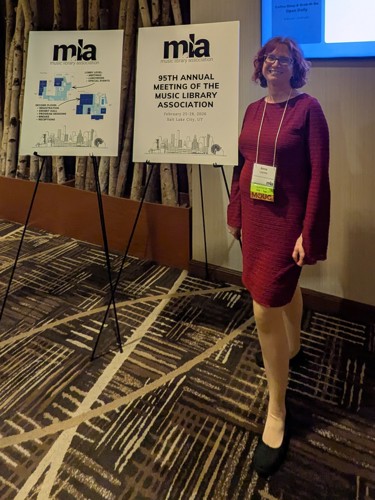
Each organization holds an annual conference where attendees are treated to a wide variety of sessions. This year’s MLA meeting, held in Salt Lake City in February 2026, had panels on programming in public libraries, genealogy, and instruction methods. MLA is committed to diversity, equity, inclusion, social justice, and anti-racism, and this year’s conference included sessions on describing folk, spiritual, and vernacular music traditions, incorporating indigenous materials in collections and programming, and creating a bibliography of African-American spirituals. Other sessions focused on local collections and genres (heavy metal, disco, and archival collections), and highlighting humor and joy in programming and playlists. There were also tours of modern architecture, the public library, and organs! The conference always climaxes with a reception featuring the MLA Big Band and Rock Band.
I have to give a shout-out (yes, even librarians on occasion shout) to MOUG – the Music OCLC Users Group. MOUG is a smaller organization primarily made up of music catalogers and metadata makers that meets for two days right before MLA. The sessions are usually very practical and technical, focusing on projects and tools. I’ve been a member for over a decade and have presented several times on statistics, databases, and my work at the Songbook Foundation. This year I was honored to be elected by the membership to the Board as the Secretary and Newsletter Editor.
“Treasures of the Great American Songbook”
At this year’s MLA conference, I gave a presentation called “Treasures of the Great American Songbook” in which I used artifacts from our collections to tell some of our most compelling stories. Here at the Songbook Foundation, we like to say that everybody has their own songbook, their own soundtrack. Inspired by that idea, I organized my presentation as five “tracks”: I Love a Piano: The Irving Berlin Story; I’ve Got You Under My Skin: The Art and Craft of Arranging; We Just Couldn’t Say Goodbye: Music on Ribs; The Setting Sun: The Last Notes of an American Icon.
A fun part of my presentation was track 4, Fascinating Rhythm: In Which I Free-Associate Over 100 Items in Under 3 Minutes. In this feature, I used Paul Whiteman’s recording of George and Ira Gershwin’s song “Fascinating Rhythm” to underlay a slideshow of over 100 items from our collections. Both the song and the recording are in the public domain.
“Does everyone tell you that you have the coolest job?”
I have a really cool job. Like most librarians, I do a variety of tasks. My primary responsibility is to arrange and describe our music library, a vast collection of well over 100,000 musical arrangements.
So what does that mean exactly? What is an arrangement? Well, an arrangement is when somebody takes a piece of music and alters it somehow from its original form, maybe changing the instruments used to perform it, the tempo, harmonies or feel of the music. Sometimes the changes are so substantial that the original is almost unrecognizable. An arrangement can be expressed in a variety of ways such as through performances and recordings or written down on paper. Arranging is as old as music itself, but for popular music of the first half of the 20th century it is an intrinsic and indispensable part of the music.
We define the “Great American Songbook” as the “canon of the most important and influential American popular songs and jazz standards from the early 20th century that have stood the test of time in their life and legacy.” When we talk about the Songbook we talk about the timeless nature of the great songs by the Gershwins, Irving Berlin, Cole Porter and so many others. We talk about how they can be constantly reinvented and reinterpreted to remain evergreen. The way this happens is through arrangement. It is through continual arranging and re-arranging that songs stand the test of time and become part of the Great American Songbook. I like to say that our music library is the Songbook made manifest.
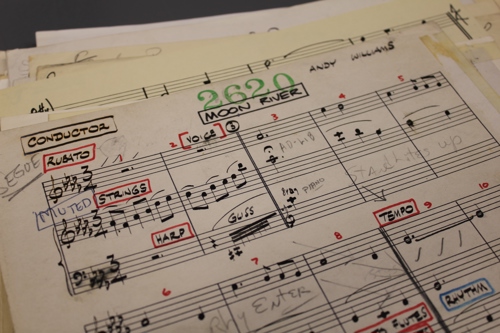
In the Songbook Foundation’s music library we hold the charts or notated music of over 100,000 arrangements created for people like Natalie Cole, Andy Williams, Mitzi Gaynor, Kay Starr and dozens of others, and by some of the greatest arrangers like Nelson Riddle, Billy May, and Don Costa. These arrangements span over a century and illustrate the trajectory of American popular music. They trace the history from dance orchestras, to big bands, to a focus on individual or group vocals. They chart changes in style, dances, and genres. They show how ensembles changed in size and instrumentation.
They highlight trends in consumption through live performances, radio, recordings, motion pictures, television variety shows and specials, and Broadway musicals. In comparing the written notes to the recordings we can learn what was part of the musical scaffolding and what the performers contributed. We can learn about artists’ processes and the music business. Modern composers and arrangers use the charts to learn and hone their craft.
We call our collections a music library but it would more accurately be described as an archive of music collections. Broadly speaking, in a library the focus is generally on a single item. You can see this in the catalog for your public library. You can look up a book and get a record about that book: the title, the author, the publisher and publication date, subject headings, and the call number and location that apply to that individual item. In an archive, the focus is on a collection and the collection as a whole is described in a finding aid. The top part of the finding aid describes the collection in its entirety: the creator, inclusive dates for the whole collection, the provenance (where the collection came from), and subject headings that apply to the entire collection. Then there’s an inventory of every item in the collection described at a fairly basic level.
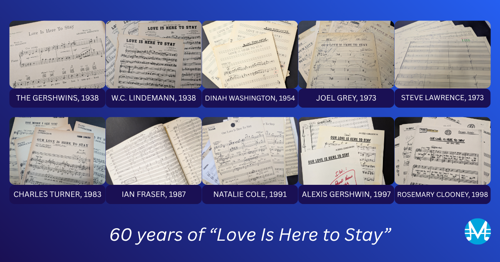
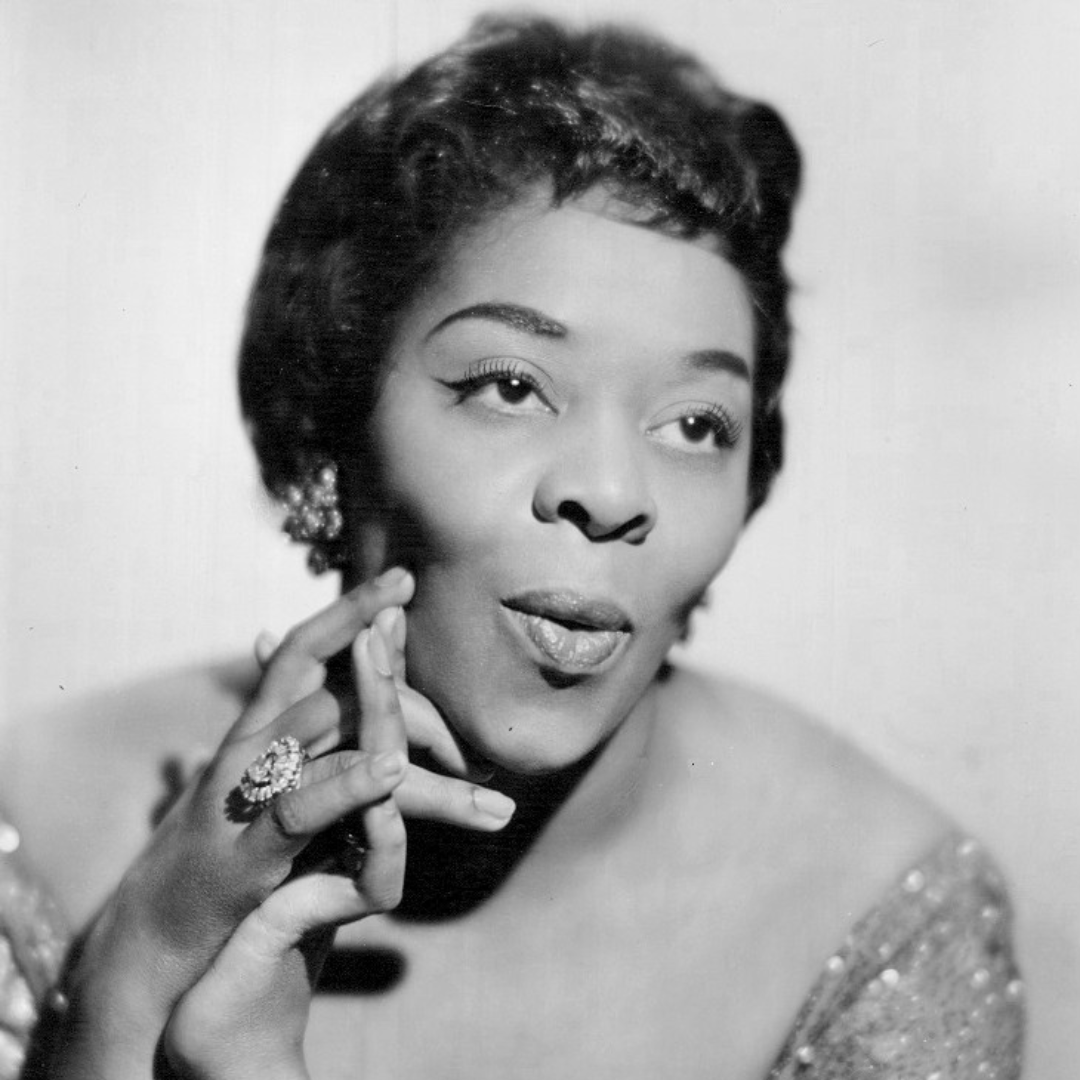
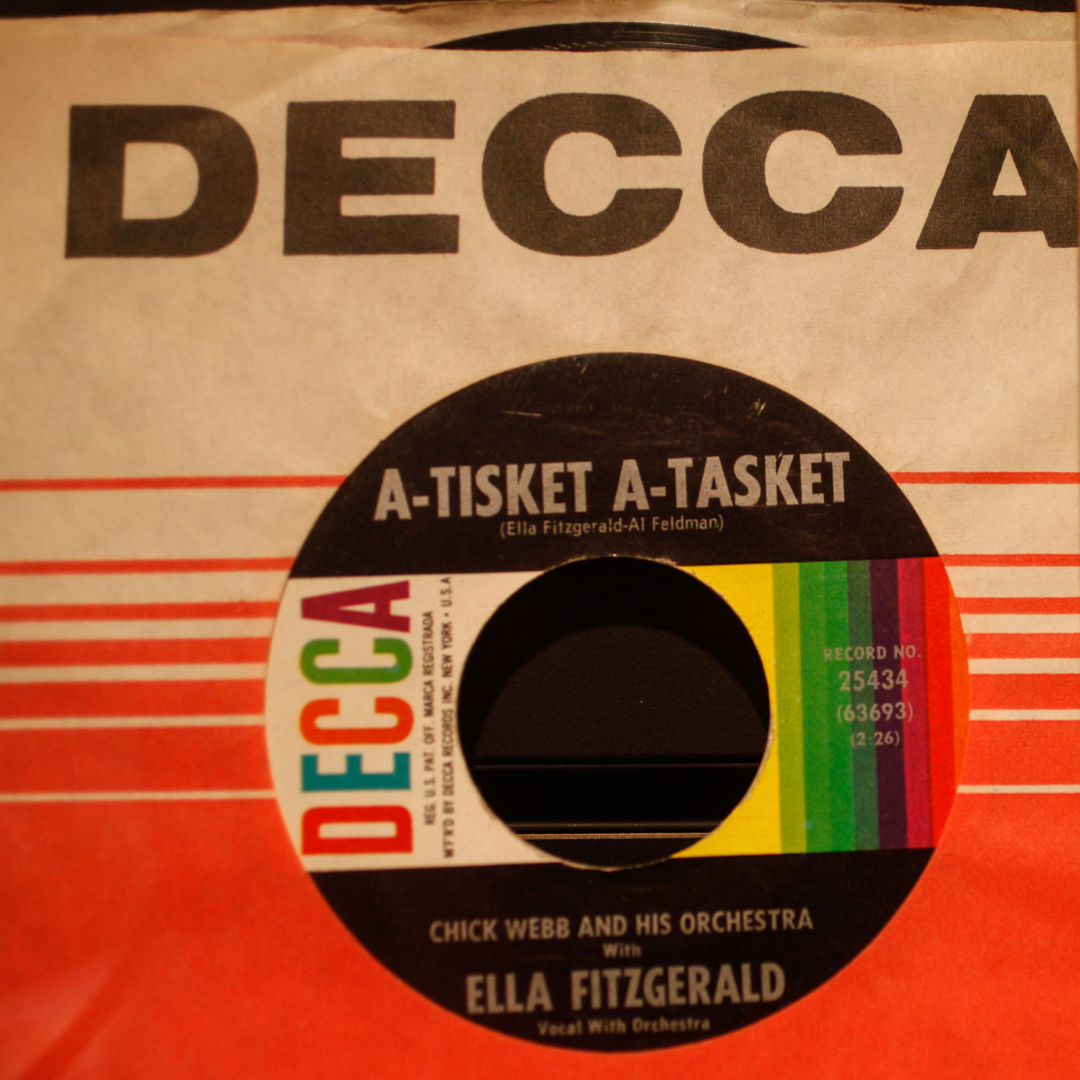
In our collections, there are sometimes numerous arrangements of the same song. There are arrangements of “Love Is Here to Stay” arranged for Joel Grey, Dinah Washington, Steve Lawrence, Natalie Cole and more. Strictly speaking, in a true library we would file all those arrangements together under the George Gershwin’s name. But we would never dream of separating the arrangements from the larger collection. What we preserve in an archive is a snapshot of an individual, seen through the physical artifacts of their life and work. In the case of the music collections, we are looking at the way artists and creators engage with the world through their primary language: their music. We make the arrangements available to researchers and performers who look not just at the notes on the pages, but the markings and annotations that reveal the musicians’ processes and perspectives.
In addition to doing the archival processing of the music collections, I am responsible for cataloging all the published resources in our reference library. I also work with researchers, musicians, and any other interested parties, to access our music collections.
For more information…
If you’ve made it this far and are interested in learning more about music libraries and music librarians, I encourage you to check out the website of the Music Library Association. If you are interested in learning more about our collections, I invite you to explore our website, follow us on social media, subscribe to our newsletter, and reach out to us directly!
Resources:
- MLA: Music Library Association
- MOLA: Major Orchestra Librarians’ Association
- IAML: International Association of Music Libraries, Archives and Documentation Centres
- MOUG: Music OCLC Users Group